Best Time to Visit the Amazon Rainforest: High Water vs. Low Water Season
One of the most common questions international travelers ask when planning an adventure in the Peruvian Amazon is surprisingly simple:
What is the best time to visit the Amazon Rainforest: high-water season or low-water season?
The answer, however, is not as straightforward as choosing one season and forgetting about the other.
The Amazon is constantly changing throughout the year. River levels rise and fall, trails transform, lakes become connected to rivers, wildlife changes its movements, and the experience of exploring the forest can be completely different depending on the season.
Therefore, there is no single perfect season for every traveler.
Instead, the best time to visit depends largely on what you want to experience.
If you dream of traveling deep into flooded forests, exploring by canoe, observing aquatic wildlife, and seeing the Amazon from the perspective of the water, high-water season can be spectacular.
On the other hand, if you prefer hiking through terrestrial forest, exploring trails, looking for mammals, and enjoying generally drier conditions, low-water season may be more suitable.
For travelers considering the Tambopata National Reserve, Peru’s National Service of Natural Areas Protected by the State (SERNANP) currently identifies May through October as the recommended visiting season, while December through March is associated with the rainy season. Tambopata has a hot and humid climate, with an average annual temperature of approximately 26°C (79°F).
Nevertheless, simply describing the Amazon as having a “dry season” and a “rainy season” is an oversimplification.
To understand when you should travel, it is important to understand what high water and low water actually mean—and how these seasonal changes affect the rainforest and its wildlife.
What Do “High Water” and “Low Water” Actually Mean?
When travelers talk about high-water and low-water seasons, they are primarily referring to the natural cycle of Amazonian rivers.
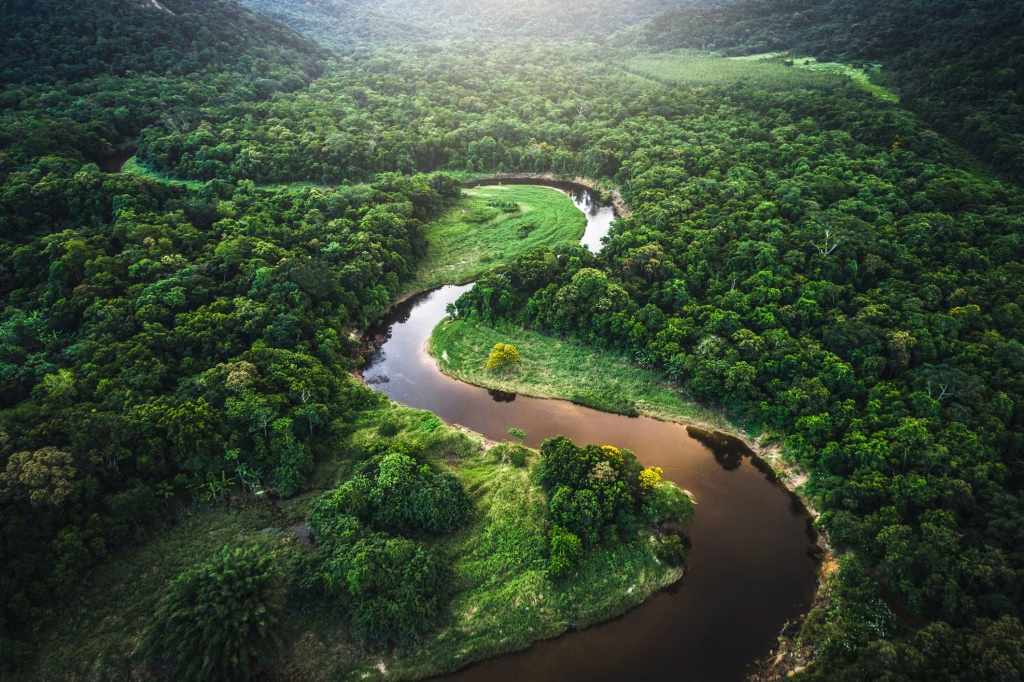
During periods of increased rainfall, enormous quantities of water enter the rivers and their levels rise.
As a result, water can spread into areas of forest that remain relatively dry during other months.
This creates a completely different landscape.
Trees that normally stand on dry ground can become surrounded by water. Some trails may temporarily disappear beneath the surface, while certain areas of forest become easier to explore by small boat.
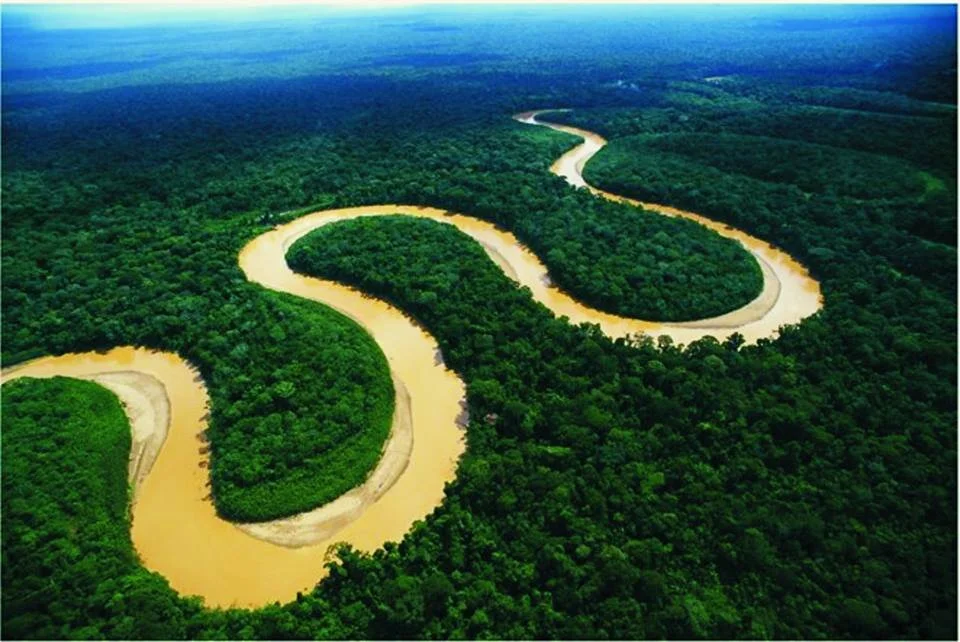
Later, as rainfall decreases and river levels fall, the water gradually retreats.
Consequently, beaches, sandbanks, trails, and areas of forest that were previously underwater begin to emerge.
This is one of the most fascinating characteristics of the Amazon.
You are not necessarily experiencing the same landscape in January that you would experience in August.
The forest changes.
The rivers change.
Access changes.
And, to some extent, wildlife behavior and viewing opportunities change as well.
Is There Really a “Best” Season?
Yes and no.
If you want a practical answer for a first trip to the Peruvian Amazon, the generally drier months are often the easiest choice, particularly if you want to combine hiking, boating, and wildlife observation.
For Tambopata, SERNANP currently recommends visiting between May and October.
However, that does not mean that the other months are bad.
In fact, some experienced travelers and nature enthusiasts may prefer high-water conditions precisely because they offer a different perspective on the rainforest.
For example, boat travel can become much more important.
Furthermore, flooded forest creates spectacular landscapes and provides access to areas that can be difficult to reach on foot.
Therefore, the right question is not simply:
“Which season is best?”
Instead, ask:
“What do I want to experience in the Amazon?”
Once you answer that question, choosing a season becomes much easier.
Low-Water Season: The Best Time for Hiking
For many travelers, low-water season is particularly appealing because it makes terrestrial exploration easier.
As river levels fall, more areas of solid ground become accessible, and some trails become easier to use.
This can be a major advantage if you enjoy hiking through the rainforest.
During a jungle walk, you can observe enormous trees, vines, palms, insects, birds, and small mammals.
Moreover, walking allows you to pay attention to signs that can be difficult to detect from a boat.
You might discover animal tracks, droppings, feeding remains, scratch marks, or other evidence of wildlife activity.
For travelers interested in mammals and wildlife tracking, these signs are an important part of the experience.
Nevertheless, it is important to remember that “low water” does not mean “dry forest.”
The Amazon remains a humid tropical environment.
Rain is still possible.
Mud is still possible.
Humidity remains high.
Therefore, travelers should be prepared for tropical conditions even during the season generally considered drier.
Low Water and Wildlife Watching
One of the biggest advantages of low-water season is the greater opportunity for terrestrial activities.
This can be particularly interesting for travelers searching for mammals.
Tambopata, for example, protects habitats where visitors can encounter monkeys, capybaras, tapirs, birds, macaws, giant river otters, caimans, and many other species.
Furthermore, certain lakes and river areas can provide excellent opportunities to combine hiking and boating.
Lake Sandoval is a particularly well-known example.
The area offers opportunities for wildlife observation, hiking, and boat excursions, while its surrounding ecosystem supports monkeys, capybaras, tapirs, birds, macaws, and giant river otters.
Therefore, if your priority is spending a significant amount of time walking through the rainforest, low-water season can be especially attractive.
Does Low Water Mean More Animals?
Not necessarily.
This is one of the most common misconceptions among first-time Amazon travelers.
It is tempting to think:
“Less water means animals will be concentrated in smaller areas, so they must be easier to see.”
Sometimes that can happen.
However, there is no universal rule.
Amazonian wildlife responds to many different factors.
Food availability, rainfall, temperature, reproduction, vegetation, river levels, seasonal flooding, and individual behavior can all influence where animals are found.
Consequently, you should not choose your travel dates solely because someone claims that a particular season will have “more animals.”
The reality is considerably more complex.
Moreover, many Amazonian species are naturally difficult to observe.
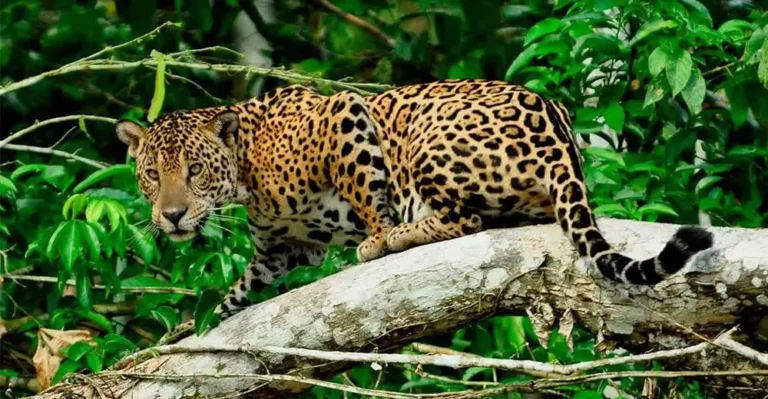
A jaguar can be present in an area without being seen by a single tourist.
A tapir may cross a trail during the night and disappear before sunrise.
A troop of monkeys may remain high in the canopy, outside your field of view.
Therefore, biodiversity should never be confused with guaranteed wildlife sightings.
High-Water Season: When the Forest Becomes a Waterway
High-water season offers an entirely different experience.
As river levels rise, water can enter areas of forest that remain dry during low-water periods.
The landscape is transformed.
In certain places, you can literally travel by boat between trees.
Channels become more important.
Areas that were previously explored on foot may become easier to reach from the water.
As a result, flooded forest provides an extraordinary visual experience.
For many travelers, this is one of the most fascinating ways to experience the Amazon.
Instead of simply seeing a river surrounded by forest, you can find yourself traveling through the forest itself.
What Wildlife Can You See During High Water?
The answer depends greatly on the particular location.
Nevertheless, flooding changes the distribution of food and movement opportunities for many species.
Fish can enter temporarily flooded forest.
Some bird species can take advantage of new food sources.
Arboreal animals can move through the canopy while the forest floor remains underwater.
Meanwhile, aquatic species may become more prominent.
Therefore, travelers interested in aquatic ecosystems may find high-water season particularly rewarding.
In Tambopata, for instance, lakes and waterways provide opportunities to observe giant river otters, caimans, birds, and other species associated with aquatic environments.
Exploring by Boat During High Water
For some travelers, one of the greatest advantages of high-water season is navigation.
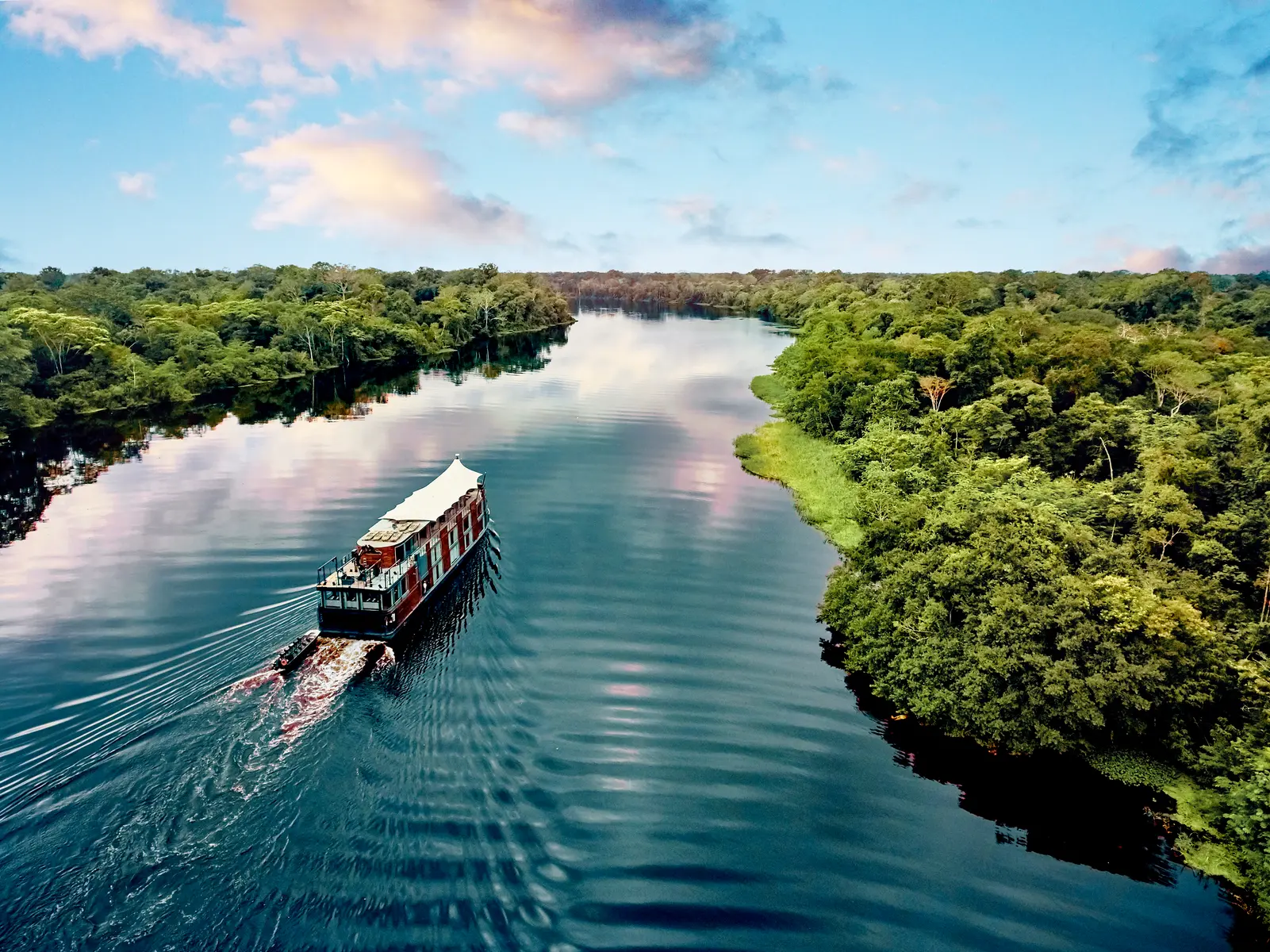
The river becomes a natural highway.
In certain areas, boats can reach places that are more difficult to access when water levels are low.
Consequently, high-water travel can be especially attractive to photographers and landscape enthusiasts.
Imagine moving quietly through flooded forest while trees rise directly from the water and birds call from the surrounding vegetation.
The experience is completely different from walking along a jungle trail.
Therefore, if your dream is to experience the flooded Amazon, high-water season deserves serious consideration.
High Water and Nature Photography
Photographers have particularly good reasons to consider both seasons.
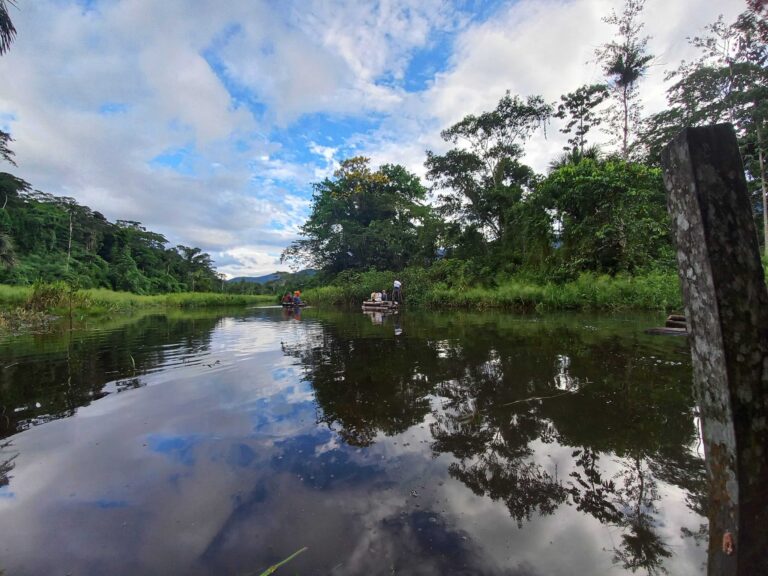
During high water, landscape photography can benefit enormously from the presence of water.
Reflections of trees can create spectacular compositions.
Moreover, traveling by boat provides a unique perspective for photographing the forest.
During low water, meanwhile, terrestrial opportunities increase.
You can work with trails, animal tracks, trees, small creatures, and different perspectives within the forest.
Therefore, there is no universally superior photography season.
It depends on the type of images you want to create.
If you want photographs of:
- Flooded forest: high water.
- Reflections and aquatic landscapes: high water.
- Boating through flooded trees: high water.
- Terrestrial trails: low water.
- Animal tracks: low water.
- Wildlife photography from terrestrial viewpoints: generally low water.
- Macaws at clay licks: dependent on local and daily conditions, not simply river levels.
- Large mammals: both seasons can be rewarding.
Rainfall: The Weather Factor Travelers Worry About Most
Many international travelers worry that visiting during the rainy season means it will rain continuously.
In reality, the situation is more complicated.
The Amazon receives rainfall throughout much of the year.
Even during months considered relatively dry, rain can occur.
Conversely, a rainy season does not necessarily mean that it will rain for 24 hours every day.
You may experience intense rain followed by several hours of sunshine.
Therefore, you should not imagine the rainy season as a period in which every excursion takes place under heavy rain.
Nevertheless, you should be prepared for changing conditions.
Tambopata has a hot and humid tropical climate, with an average annual temperature of approximately 26°C (79°F).
Consequently, travelers should prepare for heat, humidity, and rain regardless of the month.
Does the Dry Season Guarantee Good Weather?
No.
This is another myth worth clearing up.
A recommended visiting season does not mean that every day will be sunny.
Amazonian weather can change rapidly.
You might begin a morning excursion under blue skies and return to your lodge during a tropical downpour.
In addition, cold fronts known locally as friajes can temporarily cause noticeable temperature drops during certain periods of the year.
Therefore, even travelers visiting during the generally drier months should carry appropriate clothing for rain and changing temperatures.
Being prepared is much more important than expecting perfect weather.
When Is the Best Time to See Macaws?
This is an especially important question for travelers visiting Tambopata specifically to see clay licks.
Tambopata is famous for clay licks such as Chuncho and Colorado, where parrots and macaws can gather in spectacular numbers.
Hundreds of birds may assemble in the morning to consume mineral-rich clay.
However, there is an important consideration:
Sunshine matters.
Even during a generally favorable season, a particularly rainy or cloudy morning can affect bird activity and visibility at a clay lick.
Therefore, river levels are not the only factor.
Daily weather conditions can also be decisive.
For travelers hoping to photograph this phenomenon, staying several days increases the chances of experiencing a favorable morning.
When Is the Best Time to See Jaguars?
This question requires particular care.
There is no magical month that guarantees jaguar sightings.
Jaguars are extremely difficult animals to observe.
They can travel across large territories and remain hidden for long periods.
Furthermore, the fact that an area contains jaguars does not mean that a tourist will necessarily see one.
Therefore, if your main goal is to photograph a wild jaguar, you should not choose your travel dates solely according to high-water or low-water season.
Instead, prioritize the destination, experienced guides, suitable habitat, and enough time in the forest.
Tambopata, for example, is home to jaguars.
However, their presence does not mean sightings are guaranteed.
The same principle applies to Manu and other Amazon destinations.
What About Giant River Otters?
Giant river otters are closely associated with aquatic environments.
Consequently, lakes, oxbow lakes, and suitable waterways can be excellent places to look for them.
Tambopata has several important aquatic habitats where giant river otters can be observed.
In these areas, seasonality may influence access and boating conditions, but again, there is no rule guaranteeing that you will see an otter simply because you travel during a particular month.
Patience remains essential.
What Is the Best Season for Families?
For families, especially those visiting the Amazon for the first time, the generally drier months can be more convenient.
This is mainly because hiking and organizing different activities can be easier.
However, that does not mean families should avoid high-water season.
In fact, for children, traveling by boat through flooded forest can be an unforgettable experience.
The right choice should take into account the children’s ages, the length of the trip, the type of accommodation, and the activities offered by the tour operator.
In general, for a first family trip to Tambopata, May through October is a practical window, consistent with SERNANP’s current recommendation.
What Is the Best Season for Photographers?
For nature photographers, the answer depends on the subject.
If you want to create images of flooded forest, water reflections, and river landscapes, high water can be spectacular.
If you want to photograph animals along terrestrial trails, tracks, and different forest environments, low water may provide advantages.
Nevertheless, another factor may be even more important:
the length of your trip.
A photographer staying five or seven days will generally have more opportunities than someone staying only two nights.
Furthermore, a longer trip allows you to adapt to the weather.
If one day is dominated by heavy rain, you still have additional days available.
Therefore, for wildlife photography, flexibility may be more valuable than trying to identify one supposedly perfect month.
What Is the Best Season for Hiking?
If hiking is one of your priorities, low-water season is generally more convenient.
Terrestrial trails may be easier to access, while areas that are flooded during higher water levels may become available for exploration on foot.
However, mud can still be part of the experience.
Therefore, good rubber boots are essential.
SERNANP recommends rubber boots for jungle walks in Tambopata and advises visitors to wear long-sleeved clothing to help protect against mosquitoes.
Consequently, even during the season considered most favorable for hiking, you should be prepared for tropical conditions.
What Is the Best Season for First-Time Visitors?
If this is your first trip to the Peruvian Amazon and you do not have a specific preference, May through October is probably the most practical choice for visiting Tambopata.
This corresponds with the current recommended visiting season identified by SERNANP.
During these months, you can combine:
- Jungle hiking.
- Boat excursions.
- Birdwatching.
- Wildlife photography.
- Lake visits.
- Mammal searches.
- Night excursions.
- Clay-lick visits.
- Exploration of different rainforest habitats.
Nevertheless, this does not mean you should completely rule out the other months.
If your travel schedule only allows you to visit during the rainy season, you can still have an extraordinary Amazon experience.
There Is No Truly “Bad” Season in the Amazon
This is probably the most important idea in this entire article.
Many travelers search for the perfect season.
They want sunshine.
They want no rain.
They want dry trails.
They want jaguars.
They want hundreds of macaws.
They want giant river otters.
And they want all of this to happen during a three-day trip.
However, the Amazon does not work that way.
The rainforest is dynamic.
Rain is part of the ecosystem.
Water is part of the ecosystem.
Mud is part of the ecosystem.
Wildlife does not follow tourist schedules.
Therefore, there is no universally bad season for visiting the Amazon.
There is simply a season that may be more appropriate for a particular type of traveler.
What Happens Between High and Low Water Seasons?
The transition periods can also be fascinating.
The Amazon does not suddenly switch overnight from “high water” to “low water.”
River levels gradually rise or fall.
During these transition periods, travelers may experience intermediate conditions.
As a result, the landscape can offer a mixture of characteristics from both seasons.
Nevertheless, the exact timing varies from year to year and from one region to another.
Therefore, if you have flexible travel dates, it is worthwhile to check current river and weather conditions with your local operator before finalizing your itinerary.
Climate Should Not Be Your Only Criterion
When planning an Amazon trip, it is easy to focus too much on weather.
However, several other factors are equally important.
For example:
How many days do you have?
Which animals do you want to see?
Do you prefer hiking or boating?
Are you a photographer?
Are you traveling with children?
Do you prefer comfort or adventure?
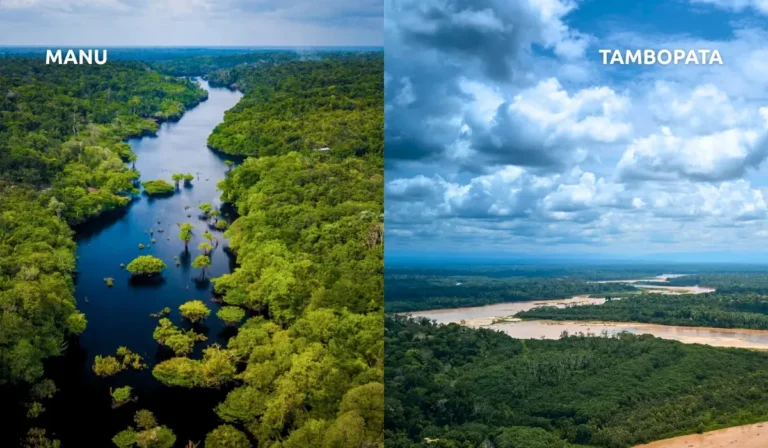
Are you choosing Tambopata or Manu?
These questions may ultimately be more important than whether a particular day receives a certain amount of rainfall.
Moreover, an experienced guide can often adapt activities according to conditions.
Therefore, choosing a knowledgeable and responsible local operator is an essential part of planning your trip.
The Golden Rule: Leave Room for the Unexpected
Finally, there is one rule every Amazon traveler should remember:
Do not try to control the rainforest.
You can control your luggage.
You can control your camera equipment.
You can control how many days you stay.
You can choose an experienced operator.
But you cannot control the rain.
You cannot control the river.
You cannot make a jaguar appear.
You cannot order macaws to arrive at a clay lick.
And you cannot tell a giant river otter where to swim.
That uncertainty is precisely what makes the Amazon so special.
The unpredictability is part of the adventure.
So, High Water or Low Water?
The answer can be summarized quite simply.
Choose low water if:
- You want to spend a lot of time hiking.
- You prefer terrestrial rainforest trails.
- You want to maximize walking opportunities.
- You are interested in animal tracks and signs.
- You generally prefer drier conditions.
- This is your first Amazon trip.
- You want to combine several terrestrial excursions.
- You are visiting Tambopata between May and October.
Choose high water if:
- You want to experience flooded forest.
- You love traveling by boat.
- Aquatic ecosystems interest you.
- You want to photograph reflections and river landscapes.
- You like the idea of navigating between flooded trees.
- You do not mind more frequent rain.
- You want to experience a different side of the Amazon.
The Best Time Depends on Your Goal
Ultimately, this is the question you should ask before booking.
Do you want to see jaguars?
Prioritize the destination, experienced guides, appropriate habitat, and trip duration rather than a specific month.
Do you want to see macaws?
Tambopata is an excellent choice, particularly if your itinerary includes the Chuncho or Colorado clay licks.Choose the season according to the type of photography you want to do and, above all, Daily weather conditions are also important.
Do you want to hike?
Lower-water months are generally more convenient.
Do you want to explore by boat?
High-water conditions can offer a particularly fascinating experience.
Do you want to photograph wildlife?
Choose the season according to the type of photography you want to do and, above all, allow yourself enough time.
Do you want comfort and easier logistics?
The May–October window can be a practical choice for a first Tambopata trip.
Is May to October the Ideal Window?
For many travelers, yes.
SERNANP currently identifies May through October as the recommended season for visiting Tambopata.
These months can provide a good balance between hiking, boating, wildlife observation, and overall travel comfort.
Nevertheless, there can still be considerable variation within this period.
Weather conditions can change from year to year, and not every day will be identical.
Therefore, rather than thinking:
“I am traveling in July, so the weather will automatically be perfect.”
It is better to think:
“I am traveling during a generally favorable period, but I am prepared for Amazonian weather.”
That mindset will help you enjoy the journey much more.
Is December to March Worth Visiting?
Absolutely.
Although SERNANP identifies December through March as the rainy season in Tambopata, this does not mean the destination becomes uninteresting.
In fact, some travelers may enjoy seeing the landscape transformed by water.
Therefore, if you travel during these months, it is important to choose an experienced operator rainforest can feel especially lush, while waterways become even more prominent.
However, rainfall can affect logistics, trails, and certain activities.
Therefore, if you travel during these months, it is important to choose an experienced operator and maintain some flexibility.
A particular activity may change schedule.
A hiking excursion may be replaced by boating.
A trail may become too wet.
And that is simply part of traveling in a tropical rainforest.
What About the Shoulder Seasons?
The transition periods can be particularly interesting because the rainforest is changing continuously.
River levels rise or fall gradually rather than switching instantly from one extreme to the other.
As a result, travelers may encounter intermediate conditions that combine elements of both high and low water.
However, because these patterns vary according to location and year, it is better to obtain updated local information before deciding on a specific itinerary.
The Amazon Is About More Than Weather
Ultimately, choosing when to visit the Amazon should involve more than looking at a rainfall chart.
Consider the entire experience.
Think about the animals you hope to encounter.
Think about how much time you can spend in the forest.
Think about whether you prefer walking or boating.
Think about whether you are a photographer or a casual nature traveler.
Think about whether comfort is important to you.
And most importantly, think about how much uncertainty you are willing to embrace.
Because the Amazon rewards patience.
Final Verdict: When Should You Visit the Peruvian Amazon?
If you want a practical answer specifically for Tambopata, the current SERNANP recommendation is May through October, while December through March corresponds to the rainy season.
For most international travelers visiting the Peruvian Amazon for the first time, this recommended window offers an excellent balance between hiking, boating, wildlife observation, and relatively convenient travel conditions.
Nevertheless, there is no perfect season for everyone.
🏆 Best overall period for a first Tambopata trip: May–October
🥾 Best for hiking: generally low-water conditions
🛶 Best for experiencing flooded forest: high-water conditions
📷 Best for photography: depends on your subject and preferred landscapes
🦜 Best for macaws in Tambopata: well-planned clay-lick visits combined with favorable daily weather
🐆 Best for jaguars: experienced guides, suitable habitat, and several days in the forest rather than a specific month
🌧️ Best for travelers who do not mind rain: the wetter months
🌿 Best advice of all: choose the experience you want, not simply the month with the “best weather”
Ultimately, the Amazon should not be visited expecting perfect conditions.
It should be visited expecting nature.
Some mornings will begin beneath brilliant blue skies.
On other days, tropical rain will hammer against the roof of your lodge.
You may spend hours walking through the forest without seeing a large mammal.
Then, suddenly, a family of monkeys may appear above your head.
You might witness hundreds of colorful macaws gathering at a clay lick.
You might hear signs of a jaguar without ever seeing the animal.
Perhaps a giant river otter will surface beside your boat at exactly the moment you least expect it.
Every one of these experiences is part of the Amazon.
That is why the most important question is not simply:
“When is the weather best?”
The better question is:
“When do I want to experience the Amazon, and what kind of rainforest do I want to discover?”
If you are prepared for rain, heat, humidity, mud, insects, changing river levels, and the unpredictability of wildlife, you will discover that almost any season can become the Amazon adventure of a lifetime.