The Jaguar (Panthera onca): The Undisputed King of the Amazon
For international travelers searching for the ultimate wildlife experience, few animals inspire as much fascination as the jaguar (Panthera onca). Powerful, elusive, and remarkably beautiful, the jaguar is widely regarded as one of the most iconic predators of the Americas. Consequently, seeing one in the wild has become the ultimate goal for many adventure travelers, wildlife enthusiasts, and nature photographers.
Unlike animals that can be observed relatively easily in zoos or wildlife parks, jaguars are notoriously difficult to encounter in their natural habitat. They are solitary animals, generally avoid humans, and can move silently through dense rainforest. Therefore, even when traveling to an area with a healthy jaguar population, there is never a guarantee that visitors will see one.
Nevertheless, that uncertainty is precisely what makes a wild jaguar encounter so extraordinary. When a jaguar suddenly appears along a riverbank, walks through the forest, or disappears into the vegetation after only a few seconds, the experience can become one of the most memorable moments of a lifetime.
Among the best destinations for travelers hoping to encounter this magnificent predator is the Amazon rainforest. In particular, the Tambopata National Reserve in southeastern Peru has gained international attention for its extraordinary biodiversity and opportunities to observe wildlife in relatively undisturbed rainforest environments.
Why Is the Jaguar Considered the Ultimate Wildlife Encounter?
First of all, the jaguar is not simply another large mammal in the rainforest. It occupies a special place in the ecological and cultural landscape of the Americas. From Mexico to South America, the species has played an important role in Indigenous traditions, mythology, and local histories for centuries.
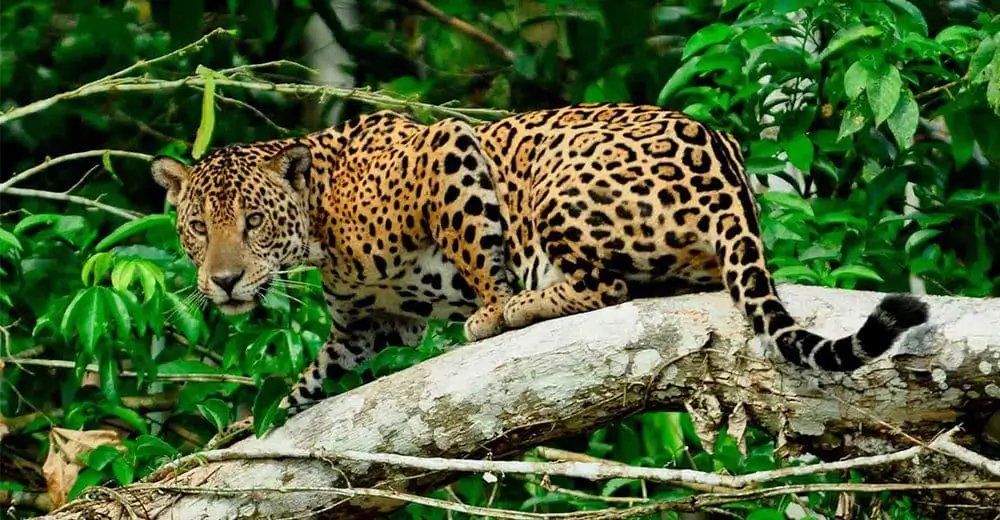
Furthermore, the jaguar is the largest cat in the Americas and the third-largest big cat in the world, after the tiger and lion. Its muscular body, powerful jaws, distinctive rosette patterns, and remarkable adaptability make it an exceptional predator.
However, its impressive physical characteristics are only part of the attraction. The real fascination comes from the animal’s behavior and its extraordinary ability to remain hidden.
A jaguar can spend hours moving through thick vegetation without being noticed. Moreover, its spotted coat provides excellent camouflage in the dappled light of the rainforest. As a result, travelers can spend several days exploring the forest without seeing anything more than tracks, footprints, or fleeting signs of the animal.
For wildlife photographers, this creates a unique challenge. Unlike photographing birds or monkeys that may remain visible for several minutes, photographing a jaguar often requires patience, preparation, and a great deal of luck.
Consequently, the photograph of a wild jaguar is much more than a beautiful image. It represents the result of time spent in nature, careful observation, and an encounter that cannot be easily repeated.
Understanding the Jaguar (Panthera onca)
The scientific name of the jaguar is Panthera onca. It belongs to the genus Panthera, which also includes lions, tigers, leopards, and snow leopards.
Although the jaguar resembles the leopard, particularly because both species have spotted coats, they are different animals. Jaguars generally have a more compact and muscular body, a broader head, and exceptionally powerful jaws.
In fact, the jaguar is famous for having one of the strongest bites relative to body size among the big cats. This allows it to use a hunting technique that is unusual among large felines: it can sometimes bite directly through the skulls or shells of prey.
The species is also an excellent swimmer. This characteristic is particularly important in the Amazon, where rivers, lakes, wetlands, and flooded forests form a major part of the landscape.
Therefore, travelers should not think of jaguars as animals restricted to dry forest or terrestrial environments. In Amazonian ecosystems, water is an important part of their world.
Jaguars are opportunistic predators and can hunt a wide variety of prey. Depending on the habitat, their diet may include capybaras, peccaries, caimans, turtles, fish, deer, monkeys, and other animals.
Because of this varied diet, jaguars can occupy different types of ecosystems. Nevertheless, they require healthy habitats and sufficient prey populations to survive in the long term.
The Jaguar’s Role in the Amazon Ecosystem
Beyond its appeal to travelers, the jaguar plays a critical ecological role.
As an apex predator, it occupies one of the highest positions in the food chain. Consequently, its presence can indicate that an ecosystem still supports sufficient habitat and prey to sustain a large predator.
This is particularly important because large carnivores require extensive territories. In other words, protecting jaguars often means protecting large areas of forest rather than isolated patches of habitat.
Moreover, protecting jaguars indirectly protects many other species. When forests are conserved to maintain viable jaguar populations, countless plants, birds, reptiles, amphibians, insects, and mammals benefit as well.
For this reason, jaguar conservation is not only about saving one spectacular species. Instead, it is about maintaining entire ecosystems.
In addition, jaguars can serve as an important symbol for conservation. Their image attracts international attention and can encourage travelers to visit protected areas. When tourism is properly managed, this interest can generate economic opportunities for local communities and provide additional incentives to conserve forests.
Therefore, the jaguar has both ecological and economic importance.
Tambopata: One of Peru’s Great Jaguar Destinations
For international travelers interested in seeing a jaguar, the Peruvian Amazon is an especially compelling destination.
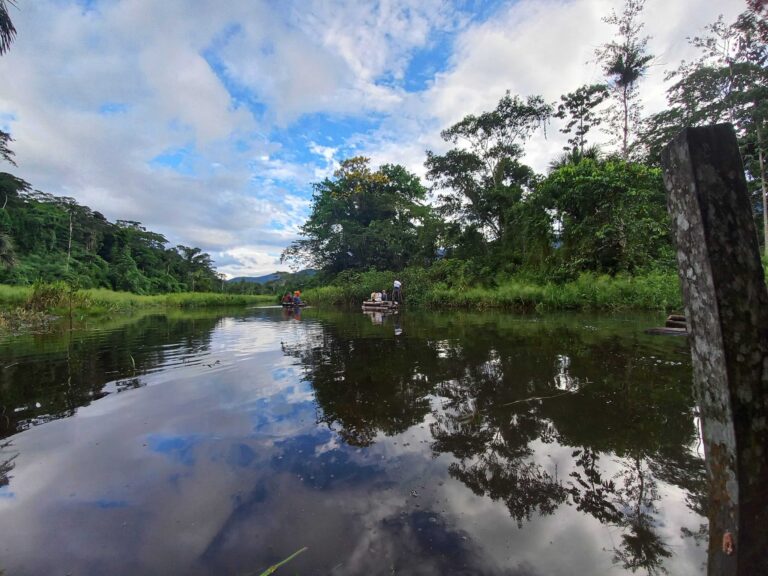
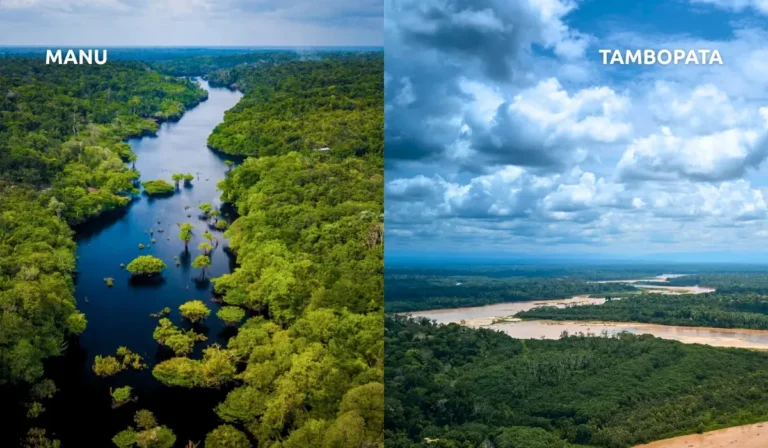
Located in the Madre de Dios region, Tambopata is recognized for its extraordinary biodiversity. The region contains extensive rainforest, rivers, oxbow lakes, wetlands, and diverse wildlife habitats.
The Tambopata National Reserve is particularly attractive because travelers can experience the Amazon while also having opportunities to search for some of its most elusive species.
However, it is important to understand that Tambopata is not a zoo. Jaguars are wild animals, and sightings cannot be guaranteed.
This distinction is essential for international visitors. A responsible wildlife experience should never promise a jaguar encounter simply because a destination has jaguars.
Instead, reputable guides should explain that wildlife viewing depends on factors such as weather, water levels, animal behavior, habitat conditions, season, and sheer chance.
Nevertheless, Tambopata provides an environment where travelers can learn about Amazonian wildlife while exploring one of the most biologically important regions of Peru.
The Importance of the Tambopata River
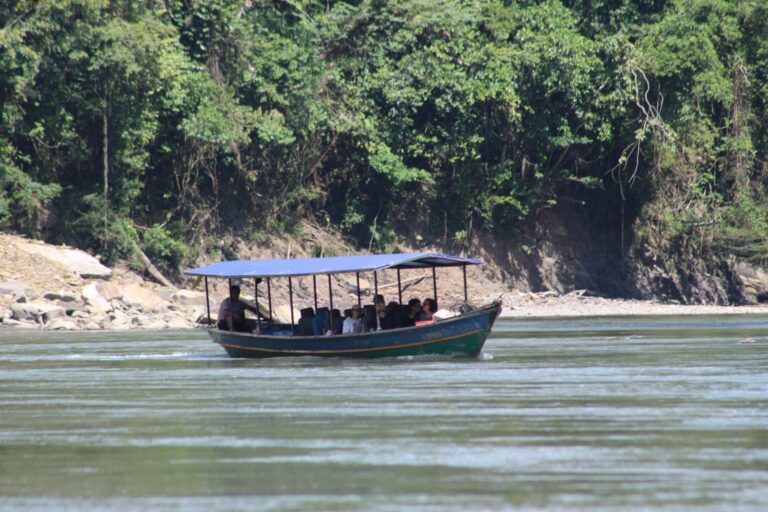
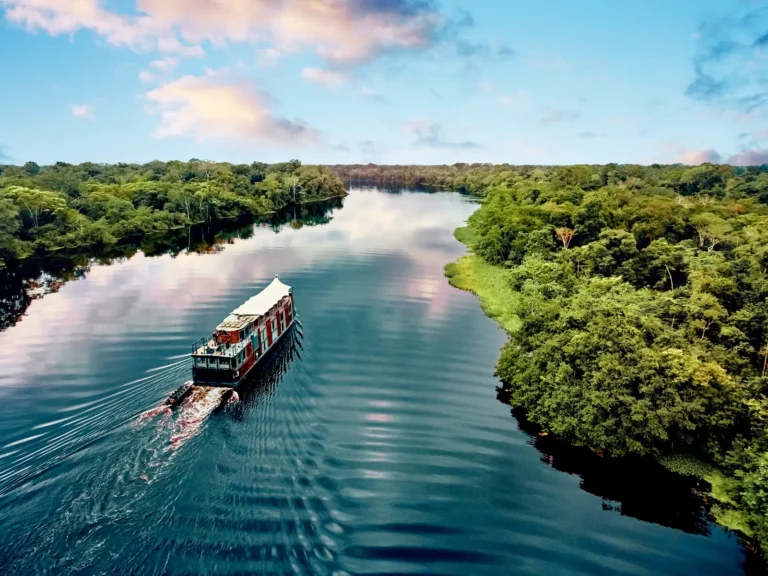
One of the most exciting aspects of exploring the Amazon is the opportunity to travel by boat.
The rivers and channels of the rainforest provide access to areas that would otherwise be extremely difficult to reach. Furthermore, boat travel can offer a different perspective for wildlife observation.
For jaguar enthusiasts, riverbanks can be particularly interesting. Jaguars are associated with rivers and wetlands in many parts of the Amazon, and individuals may sometimes be observed resting, walking, hunting, or crossing near waterways.
Consequently, travelers should keep their eyes open while navigating the river.
At the same time, patience is essential.
A guide may stop the boat after noticing tracks, movement, or another indication that a jaguar could be nearby. Visitors may then spend several minutes or even much longer scanning the riverbank.
Sometimes nothing happens.
Then, suddenly, a spotted shape appears between the trees.
This is one of the reasons jaguar watching is so addictive. The experience is not predictable. Instead, it is a combination of anticipation, observation, and discovery.
What Does a Jaguar Encounter Feel Like?
For many international travelers, the first sighting of a jaguar is difficult to describe.
Imagine sitting quietly in a boat while the rainforest surrounds you. Birds are calling from the canopy, insects are buzzing, and the river is moving slowly beneath the boat.
Suddenly, the guide points toward the shore.
At first, you see nothing.
Then you notice two eyes.
A few seconds later, the shape becomes clear: a jaguar standing on the riverbank.
For a moment, everything else seems to disappear.
The animal may remain still. Perhaps it walks slowly through the vegetation. Maybe it looks directly toward the boat before continuing along the shoreline.
And then, just as quickly as it appeared, it disappears.
For photographers, this moment can be particularly intense. There may be only a few seconds to compose the image.
Therefore, preparation matters.
A camera should be ready before the animal appears. Settings should be appropriate for the lighting conditions, and photographers should avoid spending valuable seconds searching through menus.
However, travelers should remember that photography should never become more important than the animal’s welfare.
Jaguar Photography: A Challenge for Nature Photographers
Photographing a wild jaguar is one of the great challenges of wildlife photography.
First, jaguars are unpredictable. Second, rainforest conditions can be difficult. Light levels can change rapidly, and dense vegetation can make autofocus challenging.
Furthermore, the animal may appear in deep shade while the surrounding river is extremely bright.
For this reason, photographers should learn to adapt quickly.
A fast telephoto lens can be useful because it allows photographers to capture distant subjects without approaching too closely. In addition, a camera capable of performing well in low light can be valuable in rainforest conditions.
Nevertheless, equipment alone does not guarantee a good photograph.
Patience is arguably more important.
A skilled wildlife photographer understands that the best image may come after hours of waiting. Rather than constantly moving or making noise, it is often better to remain calm and attentive.
Moreover, photographers should respect the instructions of local guides. Experienced guides understand animal behavior and the terrain. Their knowledge can help visitors enjoy the experience without unnecessarily disturbing wildlife.
Responsible Jaguar Tourism
As jaguars become increasingly popular among international travelers, responsible tourism becomes more important than ever.
Wildlife tourism can have positive effects when it is carefully managed. Visitors generate income for guides, boat operators, lodges, local businesses, conservation projects, and communities.
However, poorly managed tourism can create problems.
For example, excessive boat traffic, inappropriate approaches, loud behavior, or attempts to manipulate animal behavior can disturb wildlife.
Therefore, travelers should choose tour operators that prioritize conservation and responsible wildlife observation.
A good operator should not encourage visitors to chase animals, corner them, feed them, or otherwise interfere with their natural behavior.
Similarly, guides should be willing to leave an animal alone when necessary.
Ultimately, the goal should be observation rather than control.
A jaguar encounter is valuable precisely because it is wild.
Never Feed or Bait a Jaguar
One of the most important principles of responsible wildlife tourism is simple: wild jaguars should not be fed or baited for tourists.
Although manipulating wildlife may increase the probability of getting a photograph, it can have serious consequences.
Animals that become accustomed to human food or artificial feeding can change their natural behavior. In some cases, this can increase the risk of conflict between wildlife and people.
Furthermore, baiting creates an artificial experience.
The true magic of seeing a jaguar comes from observing an animal behaving naturally.
Therefore, travelers should ask questions before booking a wildlife tour. If an operator advertises guaranteed close encounters or uses food to attract predators, visitors should consider whether the experience is consistent with responsible tourism.
When Is the Best Time to Search for Jaguars?
One of the most common questions international visitors ask is when they should travel to maximize their chances of seeing a jaguar.
The answer is more complicated than simply naming one month.
Jaguar sightings depend on multiple factors, including rainfall, river levels, prey availability, animal movements, and local conditions.
Consequently, there is no universally guaranteed “jaguar season.”
Instead, travelers should focus on visiting a destination with suitable habitat and experienced local guides.
Moreover, flexibility can improve the experience.
A visitor who spends several days exploring the rainforest generally has more opportunities than someone who spends only a few hours looking for wildlife.
This is especially important for international travelers who may be planning a major trip to Peru.
Rather than treating a jaguar sighting as a guaranteed activity, it is better to consider it a possibility within a broader Amazon adventure.
That approach makes the experience more rewarding because every wildlife encounter becomes a discovery.
What Else Can Travelers See in Tambopata?
Even if a traveler does not see a jaguar, Tambopata offers an extraordinary variety of wildlife.
For example, visitors may encounter giant river otters, capybaras, caimans, monkeys, macaws, parrots, toucans, sloths, turtles, and countless species of insects.
Furthermore, the rainforest itself is an attraction.
The Amazon is not simply a place to check animals off a list. It is a complex living ecosystem where thousands of species interact.
Consequently, travelers should resist the temptation to measure the success of a trip solely by the number of animals photographed.
Sometimes the most memorable experience may be watching a troop of monkeys move through the canopy, listening to a chorus of birds at sunrise, or observing a family of giant river otters playing in the water.
Nevertheless, the possibility of seeing a jaguar adds an extraordinary element of excitement to the journey.
Preparing for a Jaguar Expedition
International travelers should prepare carefully before visiting the Amazon.
First of all, comfortable and practical clothing is essential. Lightweight, breathable garments are generally useful in hot and humid rainforest conditions.
In addition, travelers should bring suitable footwear, insect protection, sun protection, a reusable water bottle, and waterproof protection for electronics.
For photographers, extra batteries and memory cards are particularly important.
Why?
Because rainforest conditions can make charging and protecting equipment more difficult than expected. Moreover, an unforgettable wildlife encounter is not the moment to discover that the memory card is full.
A dry bag or waterproof camera protection can also be extremely useful, especially when traveling by boat.
Finally, visitors should be prepared for humidity, rain, mud, insects, and changing weather.
The Amazon is beautiful precisely because it is a real ecosystem rather than a controlled environment.
Patience Is the Most Important Equipment
Many travelers arrive in the rainforest with sophisticated cameras, expensive lenses, and detailed wildlife wish lists.
However, the most valuable piece of equipment may be something that cannot be purchased: patience.
A jaguar does not follow a schedule designed for tourists.
It may appear at dawn, during the afternoon, or not at all.
Therefore, travelers should approach wildlife watching with an open mind.
Instead of asking, “Where is the jaguar?” every few minutes, visitors can learn to observe the entire environment.
Look for tracks.
Listen for unusual sounds.
Watch the riverbank.
Observe the behavior of birds and monkeys.
Pay attention to the guide.
In this way, the search itself becomes part of the adventure.
Why International Travelers Dream of Seeing Jaguars
For many people living outside South America, the jaguar represents something almost mythical.
It is an animal associated with wilderness, mystery, and ancient forests.
Unlike familiar domestic animals or species commonly seen in urban environments, jaguars remain largely hidden from human civilization.
As a result, seeing one requires leaving the familiar world behind.
A journey to the Amazon therefore becomes more than a vacation.
It becomes an opportunity to enter an environment where humans are not the dominant presence.
Moreover, the experience can change the way travelers think about conservation.
It is another to sit quietly on an Amazonian river and watch a wild one thing to read about tropical forests in a book.
It is another to sit quietly on an Amazonian river and watch a wild jaguar move through the forest.
That experience can create a powerful emotional connection with nature.
The Cultural Importance of the Jaguar
The importance of the jaguar extends far beyond biology.
Across the Americas, Indigenous cultures have historically regarded the jaguar with respect and, in many traditions, spiritual significance.
The animal has often been associated with strength, authority, protection, mystery, and the power of the natural world.
Consequently, the jaguar should not be viewed simply as a photographic subject.
For many communities, it represents a deeper cultural relationship with the forest.
International visitors should therefore approach jaguar tourism with cultural as well as environmental respect.
Learning about local perspectives can make a trip considerably more meaningful.
Instead of simply asking whether a jaguar was photographed, travelers can ask what the animal represents to the people who have lived alongside these ecosystems for generations.
Conservation Challenges Facing Jaguars
Despite their extraordinary adaptability, jaguars face significant conservation challenges.
Habitat loss is one of the most important problems.
As forests are converted for agriculture, roads, mining, livestock production, and other human activities, jaguar populations can become increasingly isolated.
Furthermore, the loss of prey can put additional pressure on the species.
Human-wildlife conflict is another concern. When natural prey becomes scarce, jaguars may sometimes move closer to areas where livestock are present, increasing the possibility of conflict with farmers.
Illegal hunting and the broader illegal wildlife trade can also threaten jaguar populations.
Consequently, protecting jaguars requires more than establishing protected areas.
Effective conservation also depends on maintaining ecological corridors, protecting prey species, supporting local communities, reducing conflict, and enforcing wildlife protection laws.
How Tourism Can Help
When responsibly managed, tourism can become part of the conservation solution.
International travelers spend money on accommodation, transportation, guides, food, equipment, entrance fees, and local services.
Therefore, a healthy wildlife tourism industry can provide economic reasons to protect forests.
In addition, visitors who experience the Amazon firsthand may become advocates for conservation after returning home.
However, tourism should never be considered a substitute for effective conservation policies.
Instead, it should complement broader efforts.
For travelers, one of the easiest ways to contribute is to choose businesses that demonstrate a genuine commitment to environmental protection and local communities.
Ask where your money goes.
Ask how wildlife encounters are managed.
Ask whether local guides are employed.
Ask whether the operator follows responsible wildlife-viewing practices.
These questions can help travelers make more informed decisions.
What Makes a Jaguar Photograph Special?
A photograph of a captive jaguar can be beautiful.
A photograph of a wild jaguar, however, tells a different story.
It captures an animal existing independently in its natural environment.
Perhaps the jaguar is walking through a flooded forest. Perhaps it is resting beside a river. Maybe only its head is visible among the vegetation.
Whatever the image shows, it represents a moment in a living ecosystem.
For that reason, wildlife photography should ideally communicate more than beauty.
It can tell stories about habitat, conservation, behavior, and the importance of protecting wild spaces.
Furthermore, photographers have an opportunity to use their images responsibly.
A powerful photograph can inspire people who have never visited the Amazon to care about its future.
The Ethics of Sharing Jaguar Sightings
Modern technology has made it easier than ever to share wildlife sightings on social media.
However, this creates an important responsibility.
Publishing the exact location of a rare or vulnerable animal can sometimes attract unwanted attention.
Therefore, photographers and travelers should think carefully before sharing precise location information.
In addition, photographs should accurately represent the conditions under which they were taken.
If an image was captured using unusual circumstances or controlled conditions, viewers should not be misled into believing it represents a typical wild encounter.
Transparency helps maintain trust and promotes responsible wildlife tourism.
A Jaguar Is Not a Checklist Item
Perhaps the most important lesson for travelers is that a jaguar should never become merely another item on a checklist.
International tourism increasingly encourages people to collect experiences: the highest mountain, the rarest bird, the biggest mammal, the most spectacular photograph.
Nevertheless, wildlife does not exist for human entertainment.
A jaguar has its own territory, behavior, relationships, and survival challenges.
Therefore, the best wildlife experiences are based on respect rather than possession.
You do not need to “get” the jaguar.
You need to witness it.
That difference may seem small, but it represents a completely different philosophy of travel.
Tips for First-Time Amazon Travelers
For visitors traveling to the Peruvian Amazon for the first time, several principles can make the experience more rewarding.
First, allow enough time. A short visit can be enjoyable, but several days provide more opportunities for wildlife encounters.
Second, listen carefully to local guides. Their knowledge of the forest is invaluable.
Third, remain flexible. Weather and wildlife behavior cannot be controlled.
Fourth, bring appropriate equipment but do not become obsessed with photography.
Fifth, respect the environment. Avoid leaving waste behind and follow the rules of protected areas.
Finally, remember that the rainforest is the destination itself.
Even without a jaguar sighting, you are experiencing one of the most extraordinary ecosystems on Earth.
The Meaning of a Wild Jaguar Encounter
Ultimately, seeing a jaguar in the wild is about much more than seeing a large cat.
It is about experiencing a moment of genuine connection with wilderness.
In an increasingly urbanized and technologically connected world, encounters with truly wild animals are becoming increasingly meaningful.
When a jaguar walks through the forest, it does not know that tourists have traveled thousands of kilometers to see it.
It does not pose for photographs.
It does not follow a schedule.
It simply continues living.
And that is precisely what makes the encounter so powerful.
For the traveler, the moment may last only a few seconds.
Nevertheless, those seconds can remain in memory for decades.
Why Tambopata Should Be on a Wildlife Traveler’s List
For international adventure travelers, Tambopata offers an exceptional combination of biodiversity, rainforest scenery, river exploration, and opportunities for wildlife observation.
The possibility of seeing a jaguar is undoubtedly one of its strongest attractions.
However, the true value of the destination extends far beyond this single species.
Tambopata represents an opportunity to experience the Amazon as a living ecosystem.
Travelers can explore rivers, walk through rainforest trails, observe birds and mammals, learn from local guides, and develop a deeper appreciation for conservation.
Moreover, responsible tourism can help demonstrate that intact forests have value not only because of their natural beauty but also because they support local economies and protect extraordinary biodiversity.
Therefore, a journey to Tambopata can become both an adventure and an educational experience.
Final Thoughts: The King of the Amazon
The jaguar (Panthera onca) deserves its reputation as one of the most spectacular animals in the Americas.
Powerful yet elusive, solitary yet deeply connected to its ecosystem, it represents the wildness that continues to survive in the great forests of South America.
For international travelers, seeing a jaguar in the wild may truly feel like the “holy grail” of wildlife travel.
However, the real reward is not simply taking a photograph.
It is knowing that you have witnessed a wild animal in a natural environment, behaving according to its own instincts and rhythms.
That is why destinations such as Tambopata are so important.
They offer travelers the possibility of an unforgettable encounter while also demonstrating the enormous value of protecting tropical forests.
Nevertheless, the future of the jaguar depends on more than tourism.
It depends on healthy forests, abundant prey, protected habitats, ecological connectivity, responsible development, effective conservation programs, and the participation of local communities.
Consequently, every traveler has a role to play.
Choose responsible operators.
Respect wildlife.
Follow protected-area regulations.
Avoid unethical encounters.
Support local communities.
And, above all, remember that the jaguar belongs in the wild.
If you are fortunate enough to see one, do not expect it to perform for you.
Simply watch.
Listen.
Appreciate the moment.
Because somewhere along an Amazonian river, hidden among the trees, the undisputed king of the forest may be watching you too.